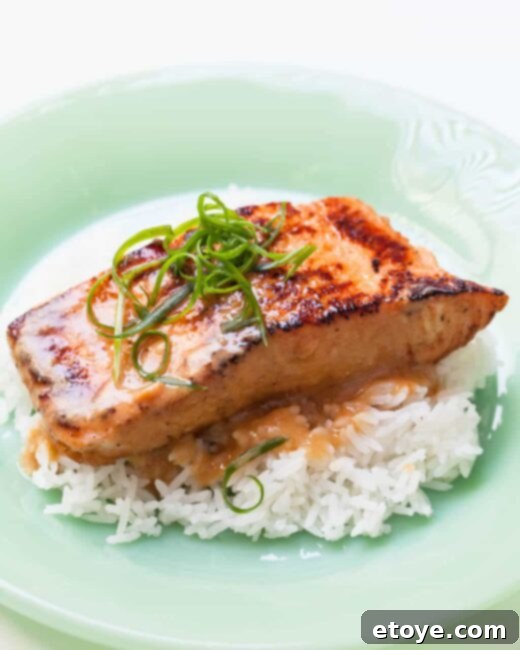
Unlock the secrets to an effortlessly delicious weeknight meal with this exquisite Miso Salmon recipe. This dish is a culinary triumph, marrying the rich, umami-packed flavors of Japanese ingredients with the flaky, tender perfection of salmon. Designed for convenience without compromising on taste, it’s a go-to for anyone seeking a healthy, full-flavored main course that pairs beautifully with a variety of sides, from fluffy steamed rice and nutritious quinoa to creamy mashed potatoes or vibrant roasted vegetables. The magic lies in its simple yet profound marinade, crafted from three staple Japanese ingredients easily found in most major supermarkets: miso, mirin, and sake. Get ready to elevate your home cooking with a dish that promises both ease and an explosion of delightful flavors.

Why This Miso Salmon Recipe Is an Absolute Must-Try
There are countless reasons why this Miso Salmon recipe stands out as a culinary gem, perfect for both seasoned cooks and kitchen novices alike. Its blend of simplicity, exceptional flavor, and versatility makes it an indispensable addition to your recipe repertoire.
- Minimal Ingredients, Maximum Flavor: With just four core ingredients and less than 5 minutes of active preparation time, this recipe proves that incredible taste doesn’t require an extensive shopping list or complex techniques. Each ingredient plays a crucial role in building the dish’s signature umami profile and perfect texture.
- Effortless Oven Broiling for Quick Cleanup: Forget about messy stovetop splatters! Broiling salmon in the oven is a fantastic way to achieve a perfectly cooked, flaky fillet with a beautiful caramelized crust, all while keeping cleanup to a minimum. It’s a hands-off cooking method that delivers restaurant-quality results with ease.
- The Sous Vide Advantage (Optional): For those who appreciate precise cooking and a consistently tender texture, this recipe adapts wonderfully to sous vide. While the broiling method is quick and simple, sous vide offers an alternative path to culinary perfection, locking in moisture and flavor for an unparalleled melt-in-your-mouth experience.
- Incredibly Versatile Serving Options: This Miso Salmon isn’t just delicious; it’s a flexible centerpiece for any meal. Serve it traditionally with a side of steamed Japanese rice, opt for a healthier alternative like quinoa, or indulge by placing it atop a mound of creamy mashed potatoes. It also pairs wonderfully with blanched greens, roasted asparagus, or a fresh side salad, making it suitable for any occasion or dietary preference.
- Packed with Healthy Goodness: Salmon is renowned for being an excellent source of Omega-3 fatty acids, vital for heart health and brain function. When combined with miso, a fermented soybean paste rich in probiotics, this dish transforms into a powerhouse of nutrition, supporting gut health and overall well-being. It’s a guilt-free pleasure that nourishes your body while delighting your taste buds.
Essential Ingredients for Your Miso Salmon Masterpiece
Crafting this unforgettable Miso Salmon dish relies on a few key ingredients, each bringing its unique contribution to the flavor profile. The beauty of this recipe lies in its simplicity, requiring only four primary components.
- Sweet White Miso Paste (Shiro Miso): The cornerstone of our marinade, shiro miso offers a delicate sweetness and mild, less salty flavor compared to darker miso varieties. It imparts a foundational umami that is both comforting and deeply satisfying.
- Japanese Sake: More than just a beverage, sake is a crucial cooking liquid in Japanese cuisine. It tenderizes the salmon, adds a subtle depth of flavor, and helps to carry the other marinade components into the fish.
- Mirin: This sweet Japanese rice wine is responsible for the beautiful glaze and hint of sweetness that caramelizes perfectly under the broiler, giving the salmon an irresistible sheen and nuanced flavor.
- Salmon Fillets: The star of the show! Choose high-quality salmon fillets, ideally skin-on for easier handling and a crisper finish. Individual portions of about 4-6 ounces are ideal for even cooking.

How To Prepare Miso Salmon: A Simple Step-by-Step Guide
Preparing this Miso Salmon is surprisingly straightforward, proving that gourmet flavors can be achieved with minimal effort. Follow these easy steps to create a dish that’s sure to impress.
Crafting the Perfect Miso Marinade
The marinade is where the magic truly begins. It takes mere seconds to whip together, yet it infuses the salmon with incredible flavor.
Begin by whisking together the sweet white miso paste, Japanese sake, and mirin in a small bowl. Aim for a smooth, uniform consistency where all ingredients are well combined. This creamy mixture will be the flavorful coat for your salmon.
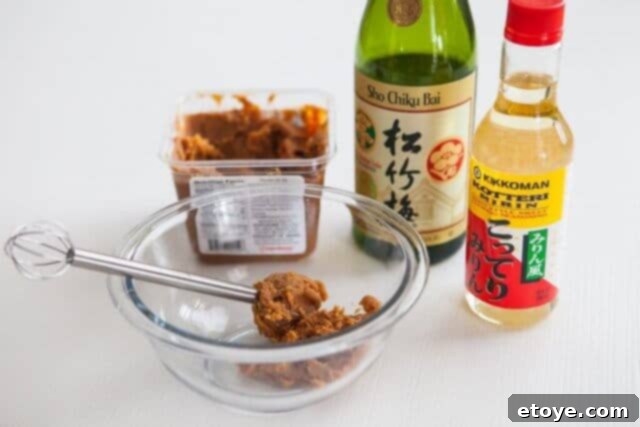
While you can use a regular whisk, a miso whisk is a handy tool designed specifically for this task. It often doubles as a measuring spoon, making it even easier to portion out the perfect amount of miso and ensures a lump-free marinade. If you don’t have one, a fork or a small conventional whisk will work just as well to achieve that smooth, creamy texture.
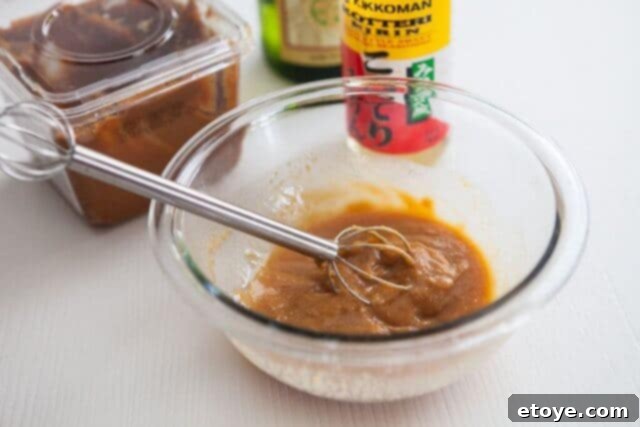
Marinating the Salmon for Optimal Flavor
Once your marinade is ready, it’s time to coat the salmon fillets. Generously spread the miso marinade over all sides of each salmon fillet. Ensure an even coating for maximum flavor absorption. After coating, place the salmon in a shallow dish, cover it, and refrigerate for at least 30 minutes. For an even deeper flavor, you can marinate the salmon for up to 2 hours. This crucial step allows the miso, sake, and mirin to penetrate the fish, tenderizing it and infusing it with their unique umami notes.

Short on Time? No Problem! If you find yourself in a rush and can’t allow for the full marinating time, there’s a clever workaround. Simply prepare a double batch of the marinade. Use one half to quickly coat the salmon before cooking. Reserve the other half and heat it gently in a small saucepan with a splash of water (about 2 tablespoons) until it thickens slightly into a delicious sauce. Drizzle this warm miso sauce over the cooked salmon just before serving for an instant burst of flavor.
Broiling to Perfection
Preheat your oven’s broiler and position the oven rack about 8 inches below the heating element. A preheated oven ensures that the salmon cooks quickly and evenly, achieving a beautiful crust without drying out. Line a baking tray with parchment paper or aluminum foil for easy cleanup. Place the marinated salmon fillets on the prepared tray. Before broiling, it’s important to gently blot away any excess miso paste from the top surface of the salmon with a paper towel. This step is crucial to prevent the marinade from burning under the high heat of the broiler, which can result in a bitter taste. Broil the salmon for 10-12 minutes, or until the fish flakes easily with a fork and develops an attractive golden-brown, slightly caramelized crust. Keep a close eye on it, as broilers can vary in intensity.
Understanding Miso: The Heart of Japanese Flavor
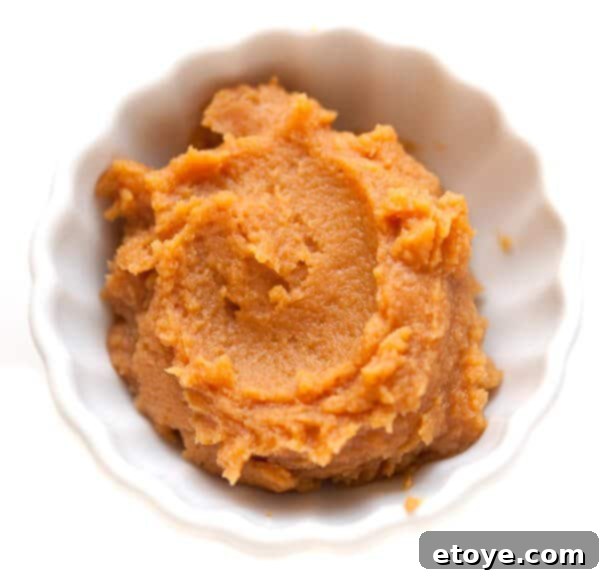 Miso paste is a cornerstone of Japanese cuisine, a versatile fermented soybean paste that contributes a profound depth of flavor known as “umami.” Traditionally made from soybeans, rice or barley, and sea salt, miso undergoes a careful fermentation process with koji mold (Aspergillus oryzae), resulting in a spectrum of flavors and colors. It’s not just the main ingredient in the comforting miso soup, but also a key component in marinades, dressings, and pickling, adding a distinctive richness to countless dishes.
The World of Miso Flavors
The flavor profile of miso is incredibly diverse, ranging from savory and salty to sweet, fruity, or earthy, depending on its ingredients, fermentation period, and regional production methods. Each region in Japan boasts its specialty, with many families still upholding the tradition of making their homemade miso batches. For this Miso Salmon recipe, we specifically seek out “sweet white miso” or “shiro miso.” This variety is characterized by its lighter color, shorter fermentation time, and a sweeter, less salty taste compared to its darker counterparts like red miso (aka miso) or mixed miso (awase miso). Shiro miso allows the delicate flavor of the salmon to shine through, complementing it with a gentle, balanced sweetness and umami.
Health Benefits and Sourcing Miso
Beyond its culinary appeal, miso is lauded for its health benefits, primarily as a rich source of probiotics, which are beneficial for gut health and digestion. Most store-bought miso is naturally gluten-free, typically made with rice koji. However, always check the ingredient label to ensure no barley, rye, or wheat has been used in its production if you have dietary restrictions. Miso paste is now widely available in most major supermarket chains, usually found in the refrigerated produce section. Reputable brands like Marukome Organic Miso are easily accessible, and many health food stores, like Whole Foods, also carry high-quality options, including products from companies like American Miso Company.
For those eager to delve deeper into the art of using miso, understanding its production, or exploring traditional Japanese farm food, the book Japanese Farm Food by Nancy Singleton Hachisu comes highly recommended. It’s a treasure trove of stories and culinary journeys that offers profound insights into Japanese food culture, even if you just enjoy reading the narratives.
Decoding Mirin: Japanese Sweet Cooking Wine
 Mirin is a fundamental sweet cooking wine in Japanese cuisine, distinguishable by its beautiful golden amber hue and slightly syrupy consistency. Made from sweet glutinous rice, water, and koji, it imparts a delicate sweetness and, perhaps most notably, a gorgeous sheen to dishes—a characteristic often observed in classic teriyaki sauces. This lustrous finish enhances the visual appeal of many Japanese preparations, including our Miso Salmon.
Hon Mirin vs. Aji Mirin: Understanding the Difference
Traditionally, “hon mirin” (true mirin) is produced through a natural fermentation process, resulting in a complex sweetness and an alcohol content of around 14%. However, finding genuine hon mirin can be a challenge outside of specialty Asian markets. What is commonly available in most supermarkets, and even many Asian grocery stores, is often “aji mirin” or “mirin-style seasoning.” These products typically have a much lower alcohol content (sometimes as low as 1% or none at all) and achieve their sweetness through added sugars rather than natural fermentation. While hon mirin offers a more nuanced flavor, aji mirin is a perfectly acceptable and accessible alternative for most home cooking applications, including this recipe.
Mirin Substitutions and Labeling Tips
If mirin is unavailable, a simple substitute can be made by combining 2 tablespoons of white wine or sake with 1/4 teaspoon of sugar. This blend mimics mirin’s sweetness and a portion of its alcohol content. When shopping for mirin, label terminology can be confusing. Look for phrases such as “sweet cooking wine,” “sweet cooking rice wine,” or “sweet cooking rice seasoning.” It is crucial to distinguish mirin from “rice wine vinegar,” which is an acidic vinegar made from rice and will not provide the same sweet, glazing effects as mirin. Always choose a product clearly labeled as a sweet cooking wine or seasoning to ensure the best results for your Japanese dishes.
Exploring Japanese Saké: More Than Just a Drink
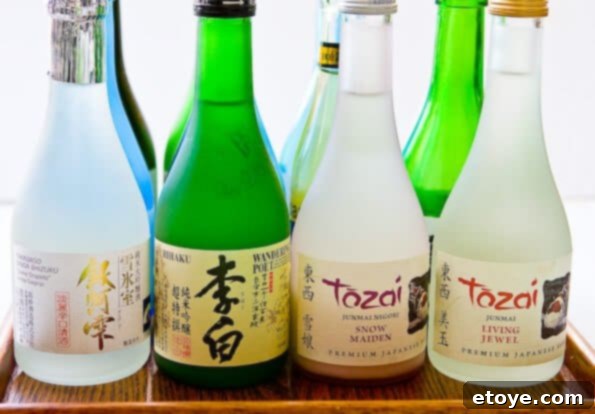 Saké, revered in Japan as the “Drink of the Gods,” is an alcoholic beverage meticulously produced from specialized sake varietal rices, pristine water, koji spores, and selected yeasts. Unlike wine, which is fermented from fruit, sake is brewed like beer, where starch is converted to sugar, and then sugar to alcohol. However, its complex flavor profiles and delicate aromas often lead it to be enjoyed much like a fine wine.
Saké in Cooking and Sipping
Saké serves a dual purpose: it’s a cherished beverage and an indispensable ingredient in Japanese cooking. In culinary applications, sake contributes significantly to tenderizing proteins, masking undesirable odors in fish and meat, and imparting a subtle sweetness and umami depth. For cooking, less expensive varieties of sake are generally preferred, as their robust flavors hold up well under heat without breaking the bank.
When it comes to sipping, the quality of sake becomes paramount. Premium sake, often enjoyed chilled, offers a refined experience with intricate flavors and aromas. Higher grades such as “Junmai,” “Ginjo,” and “Daiginjo” denote specific brewing methods and rice polishing ratios, resulting in progressively more aromatic and delicate sakes. Heating sake, particularly lower-quality varieties, is a traditional method often employed to soften their sharper edges and mask less desirable flavors. For an optimal sipping experience, it’s generally recommended to serve premium sakes chilled to fully appreciate their nuanced characteristics.
For enthusiasts keen on delving deeper into the fascinating world of Japanese sake, including its intricate production, how to differentiate various grades, perfect food pairings, and guidance on purchasing, a comprehensive series dedicated to this topic can be found here.
Top Tips for Mastering This Miso Salmon Recipe
Achieving perfectly cooked Miso Salmon is simple, especially when you keep these expert tips in mind. They’ll help you elevate your dish from good to exceptional every time.
- Always Preheat Your Oven: A properly preheated oven, especially for broiling, is crucial. It ensures the salmon cooks rapidly and evenly, developing that desirable caramelized crust without overcooking the interior. Don’t rush this step!
- Optimal Marination Time: Aim to marinate the salmon for at least 30 minutes. This allows the miso marinade ample time to infuse its rich umami flavors into the fish. For an even more profound depth of flavor, marinate for up to 2 hours. However, avoid marinating for much longer than 2-3 hours, as the salt in the miso can begin to cure the fish, altering its texture.
- Blot Away Excess Miso: Before placing the salmon under the broiler, gently pat away any thick, excess marinade from the top surface of the fillets using a paper towel. Miso paste contains sugars that can burn quickly under high heat, leading to a bitter taste. A thin, even layer is all you need for that perfect golden glaze.
- The Quick Sauce Hack: As mentioned, if marination time is a luxury you don’t have, double your marinade recipe. Use half to coat the salmon immediately, then warm the other half with a tablespoon or two of water in a small saucepan to create a delicious, quick sauce to drizzle over the finished dish.
- Monitor for Doneness: Salmon is best when cooked to medium-rare or medium, around 125-145°F (52-63°C) internal temperature. It should flake easily with a fork but still be moist in the center. Avoid overcooking, as this can result in dry, less flavorful fish.
- Don’t Overcrowd the Pan: Give your salmon fillets space on the baking tray. Crowding the pan can lead to steaming rather than broiling, preventing the beautiful caramelization you’re aiming for. Use two trays if necessary.
Explore More Delicious Salmon Recipes
If you’ve fallen in love with the versatility and flavor of salmon, there’s a whole world of recipes waiting to be discovered. Here are some other fantastic salmon dishes to inspire your next meal:
- Salmon with Magical Butter Sauce
- Teriyaki Salmon Recipe
- Salmon Tartare
- Salmon Burger Recipes + video on how to form patties
Have you tried this Miso Salmon recipe? We’d love to hear your thoughts and see your culinary creations! Feel free to leave a star rating and share your comments below. Your feedback helps our community of food lovers!
Miso Salmon
This Miso Salmon recipe makes an easy, no fuss, full-flavored dish to pair with rice, quinoa or even on top of mashed potatoes.
Ingredients
- 1/4 cup sweet white miso paste (shiro miso)
- 2 tablespoons Japanese sake
- 2 tablespoons mirin
- 4 salmon fillets (4 ounces each)
Instructions
- In a small bowl, whisk together the miso, sake and mirin. On a plate, spread the miso mixture on all sides of the salmon. Cover and refrigerate for 30 minutes to 2 hours.
- Turn oven to broil, set oven rack to 8″ below heating element, and preheat until hot.
- Place salmon fillets on a baking tray lined with parchment or tin foil. Use paper towel to blot away the miso from top of salmon to prevent burning.
- Broil salmon 10-12 minutes, until flakes easily and is nicely browned on top.
Notes
*No time to marinade? Double the miso, sake and mirin measurements. Reserve half of this mixture. Prepare and cook salmon as in recipe. When salmon is just about ready, pour reserved miso mixture into a small sauce pan, whisk in 2 tablespoons of water. Heat over medium heat until bubbling. Pour sauce over salmon to serve.
Nutrition
Carbohydrates: 8g
Protein: 8g
Fat: 3g
Saturated Fat: 1g
Cholesterol: 16mg
Sodium: 718mg
Potassium: 175mg
Fiber: 1g
Sugar: 3g
Vitamin A: 15IU
Calcium: 13mg
Iron: 1mg
Tried this recipe? Let us know how it was!
Thank you for supporting Steamy Kitchen!
We hope this expanded guide empowers you to create a delightful Miso Salmon dish that becomes a regular feature in your kitchen. Happy cooking!