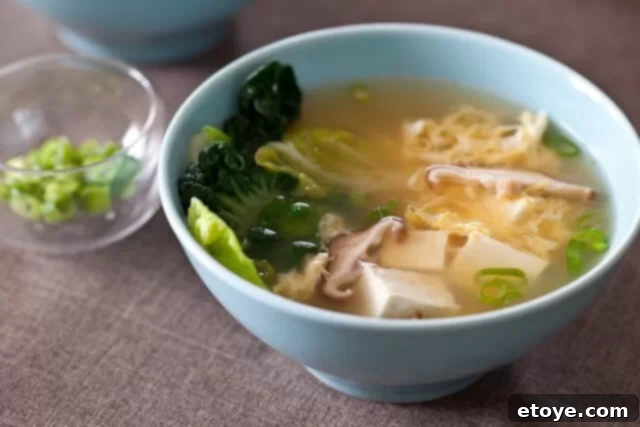
Craving a comforting bowl of Japanese goodness that’s both nourishing and incredibly flavorful? Look no further than this delightful Miso Soup with Mushrooms and Tofu. This isn’t just any miso soup; it’s a hearty yet fresh concoction, fortified with a silky whisked egg, earthy mushrooms, tender tofu, and your choice of vibrant leafy greens. It’s the perfect dish to satisfy your Japanese food cravings, whether you’re in a hurry or simply seeking a deeply savory and wholesome meal.
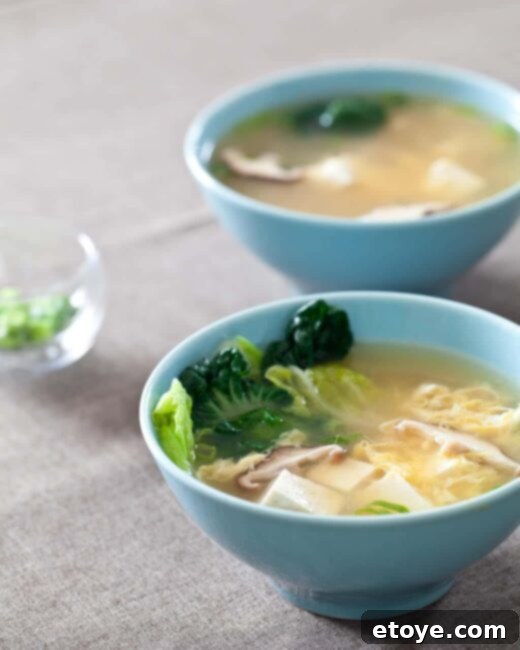
Why This Miso Soup with Mushrooms and Tofu is Your New Go-To Recipe
This particular miso soup recipe stands out for several compelling reasons, making it an essential addition to your culinary repertoire. It seamlessly blends simplicity with profound flavor, offering a satisfying experience without demanding hours in the kitchen.
- **Effortlessly Easy & Exceptionally Flavorful:** This recipe is designed for ease, proving that you don’t need extensive culinary skills to create a rich, authentic Japanese-inspired soup. It’s packed with goodness, delivering a savory punch that warms you from the inside out.
- **Hearty and Wholesome, Yet Refreshingly Light:** Despite its substantial ingredients like tofu and mushrooms, the soup maintains a beautiful balance, feeling hearty enough to be a complete meal while remaining fresh and light on the palate.
- **Infinitely Adaptable with Fresh Greens:** One of the greatest advantages of this miso soup is its flexibility. It welcomes all kinds of leafy greens, from spinach to bok choy to napa cabbage, allowing you to customize it based on what’s fresh and available in your fridge.
- **Instant Gratification for Japanese Cravings:** When that sudden desire for authentic Japanese flavors strikes, this soup is your quickest path to satisfaction. It comes together rapidly, making it ideal for busy weeknights or a quick, healthy lunch.
- **Nutrient-Packed Goodness:** Loaded with protein from tofu and egg, vitamins from leafy greens, and the probiotic benefits of miso, this soup is a powerhouse of nutrition that supports overall well-being.
- **Comfort Food Reimagined:** There’s something inherently comforting about a warm bowl of miso soup. This version elevates that comfort with added textures and flavors, making it a truly soul-soothing dish.
Essential Ingredients for Your Perfect Miso Soup
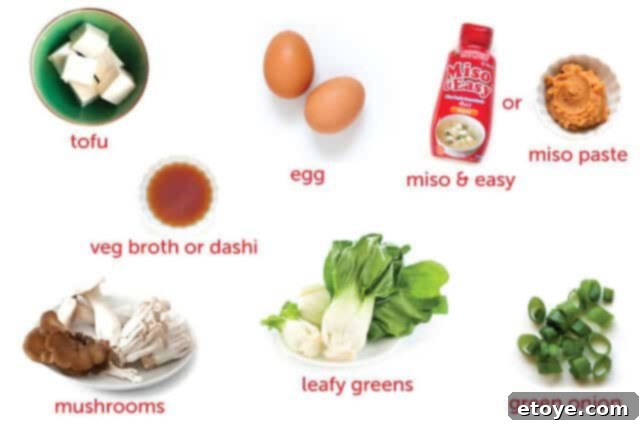
Crafting a truly exceptional Miso Soup with Mushrooms and Tofu begins with selecting quality ingredients. Each component plays a vital role in building the soup’s depth of flavor and satisfying texture. Here’s a detailed look at what you’ll need and considerations for each:
- **Tofu:** The cornerstone of this soup, tofu provides a wonderful source of plant-based protein and absorbs the rich flavors of the broth. Opt for firm or extra-firm tofu, as it holds its shape well when cubed and simmered. You might consider pressing it gently before cubing to remove excess water, allowing it to better soak up the broth. Silken tofu can also be used for a creamier texture, but it will be more delicate.
- **Mushrooms:** Earthy and savory, mushrooms add significant depth and an appealing texture. Varieties like shiitake, cremini, enoki, or oyster mushrooms all work beautifully. Shiitake mushrooms, in particular, lend a distinct umami flavor that complements miso perfectly. Slice them thinly or quarter them, depending on their size and your preference.
- **Leafy Vegetables:** This is where you can truly personalize your soup. A handful of fresh, chopped leafy greens adds color, nutrition, and a touch of freshness. Popular choices include spinach, baby bok choy, napa cabbage, or even kale. Add them towards the end of cooking to ensure they retain their vibrant color and a slight crispness.
- **Egg:** A whisked egg swirled into the hot broth creates delicate, silken ribbons that enrich the soup and add an extra layer of protein and creaminess. Ensure the broth is simmering gently when you add the egg to achieve this effect.
- **Green Onion:** Freshly chopped green onions (scallions) are indispensable as a garnish. They provide a mild oniony bite and a burst of vibrant green color, adding a final touch of freshness and aroma to each serving.
For the Broth: Choosing Your Miso Base
The foundation of any good miso soup is its broth. You have a couple of options depending on convenience and desired authenticity:
If Using Miso & Easy: The Convenient Choice
- **Water:** Simply bring water to a boil as directed by the product.
- **Miso & Easy:** This prepared miso paste offers incredible convenience, allowing you to create instant miso soup by just adding hot water. It’s perfect for those seeking a quick and effortless meal without compromising on flavor.
If Using Traditional Miso Paste: For Depth and Authenticity
- **Dashi or Vegetable Broth:** For a truly authentic Japanese experience, dashi is the preferred base. It’s a delicate broth rich in umami. If dashi isn’t available or if you prefer a vegetarian option, a good quality vegetable broth makes an excellent substitute.
- **Miso Paste:** This fermented soybean paste is the heart and soul of the soup. Miso comes in various types (white, red, mixed), each with distinct flavor profiles. We’ll delve deeper into miso types below, but for now, choose a paste that suits your taste.
Step-by-Step Guide: How to Craft Your Perfect Miso Soup with Mushrooms and Tofu
Creating this delicious and comforting Miso Soup is straightforward, even for novice cooks. Follow these simple steps for a truly rewarding culinary experience:
- **Prepare Your Broth Base:** In a medium sauce pot, bring your chosen broth (dashi, vegetable broth, or water if using Miso & Easy) to a gentle boil over medium-high heat. While it’s heating, take a moment to cube your tofu, slice your mushrooms, and chop your leafy greens and green onions. Having everything ready will make the process seamless.
- **Add Solids and Egg:** Once the broth reaches a boil, reduce the heat to a simmer. Carefully add the cubed tofu, sliced mushrooms, and your desired leafy vegetables to the pot. Allow them to cook for about 1-2 minutes until the vegetables are slightly wilted and the tofu and mushrooms are heated through. While the vegetables are simmering, slowly pour in the whisked egg in a thin stream, stirring the broth gently as you pour. This technique creates beautiful, silky egg ribbons throughout the soup. Continue to cook for another 2 minutes until the egg is fully cooked.
- **Incorporate the Miso (Crucial Step!):** This step is vital for preserving the delicate flavors and probiotic benefits of miso. Remove the pot from the heat **before** adding the miso.
- **If using Miso & Easy:** Simply stir in the recommended amount of Miso & Easy paste directly into the hot (but not boiling) soup until it is fully dissolved.
- **If using traditional Miso Paste:** Ladle about ½ cup of the hot broth into a separate small bowl. Add the miso paste to this small bowl. Using a fork or a small whisk, stir the miso paste vigorously until it fully dissolves and creates a smooth liquid. This tempering prevents the miso from clumping in the main pot and ensures even distribution. Once smooth, pour the liquified miso paste back into the main pot and stir gently to combine. It’s crucial not to boil the soup after adding miso, as high heat can destroy the beneficial enzymes and diminish its unique flavor.
- **Garnish and Serve:** Ladle the hot miso soup into individual bowls. Garnish generously with the freshly chopped green onions. Serve immediately and savor every warm, flavorful spoonful!
Miso Soup: The Unexpectedly Perfect Breakfast
While many might associate breakfast with sweet pastries or hearty bacon and eggs, my household offers a different, albeit equally delicious, morning ritual. As my many house guests can attest, I’m not typically a breakfast enthusiast – unless, of course, a morning after calls for half a pound of bacon! My dear friends, Diane and Todd, once graced our home, and it was a breakfast extravaganza. My boys, with their uncanny ability to wake up with an insatiable appetite, would drag them from their cottage to our kitchen, eager for their legendary morning feast. We indulged in homemade pancakes, waffles, French toast, and even cinnamon sugar knots. And yes, a staggering ten pounds of bacon mysteriously vanished – I’m not exaggerating!
The somber Sunday morning after they left, seeing my boys’ faces as they realized Uncle Todd and Auntie Diane were gone, was a testament to the magic of that breakfast. It was back to cold cereal and boring eggs. However, there is ONE thing that consistently tempts my palate in the morning: a quick, 10-minute miso soup. (Sometimes I also enjoy Ochazuke, but that’s a story for another post!). My body simply craves those savory Japanese flavors to kickstart the day. A bowl of miso soup, enriched with a whisked egg, earthy mushrooms, tender tofu, and whatever leafy greens I have on hand, truly hits the spot, providing a warm, nutritious, and satisfying start.
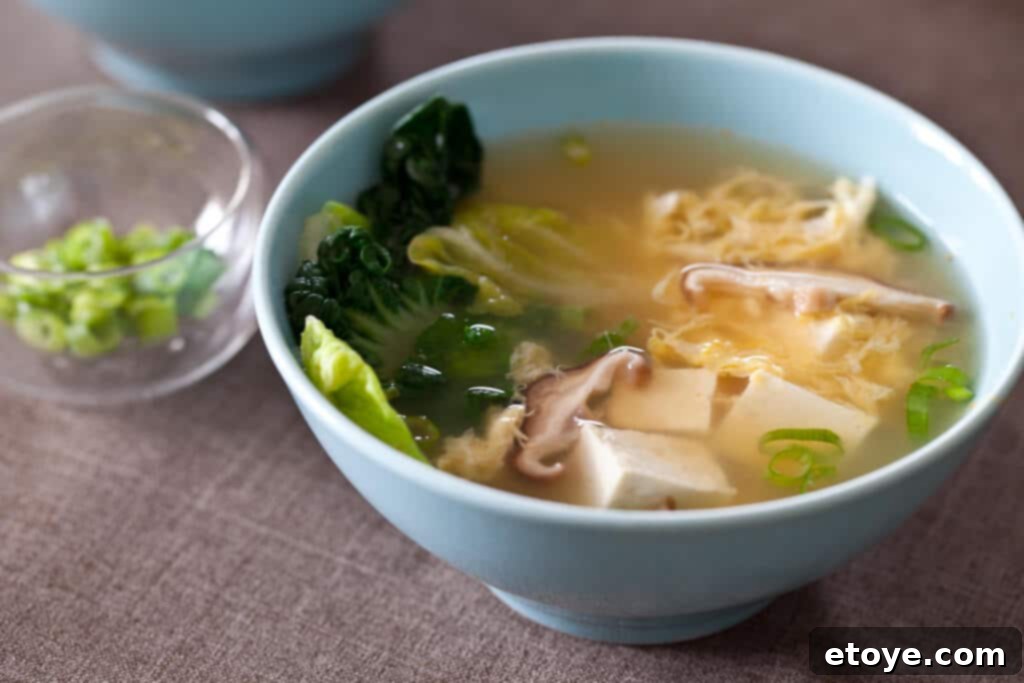
Understanding Miso: Choosing the Right Paste for Your Palate
Miso paste is the irreplaceable ingredient that gives miso soup its distinctive umami-rich flavor. It’s a traditional Japanese seasoning produced by fermenting soybeans with salt and kōji (a type of fungus) and sometimes rice, barley, or other ingredients. The fermentation process can vary widely, leading to a diverse range of miso types, each with its own unique characteristics.
- **Shiro Miso (White Miso):** This is the lightest and sweetest type of miso, fermented for a shorter period and often containing a higher proportion of rice kōji. It has a mild, subtly sweet, and slightly salty flavor, making it excellent for light soups, dressings, and marinades. It’s a great choice for those new to miso or who prefer a milder taste.
- **Aka Miso (Red Miso):** Fermented for a longer duration, often with barley or a higher percentage of soybeans, aka miso has a more robust, salty, and pungent flavor. Its color ranges from reddish-brown to dark brown. Red miso is perfect for heartier soups, stews, and glazes where a strong umami kick is desired.
- **Awase Miso (Mixed Miso):** As the name suggests, awase miso is a blend of different miso types, typically shiro and aka. This combination offers a balanced flavor profile that incorporates the sweetness of white miso with the depth of red miso, making it a versatile choice suitable for most dishes, including this soup.
I’ve been developing recipes for a new product called Miso & Easy, which is a fantastic pre-prepared miso paste solution. It’s incredibly convenient – just add hot water, and you have instant, delicious miso soup. This innovative product simplifies the process, making authentic Japanese flavors accessible to everyone.
However, if you’re using traditional miso paste, the recipe remains the same, but remember to use dashi or vegetable broth as your liquid base instead of plain water to build that essential foundational flavor.
Dashi Demystified: The Foundation of Authentic Japanese Flavor
Dashi is more than just a broth; it’s the fundamental building block of Japanese cuisine, imparting a distinctive umami depth that is hard to replicate. Unlike Western broths made from chicken, beef, or vegetables, dashi typically features the unique flavors of sea vegetables and dried fish.
Traditionally, dashi is made from **kombu** (dried kelp) and **katsuobushi** (shaved dried bonito flakes). The process involves gently simmering kombu to extract its natural glutamates, followed by a brief infusion of katsuobushi to add its inosinate-rich flavors. This combination creates a synergistic effect, resulting in a profound umami taste that elevates any dish it touches.
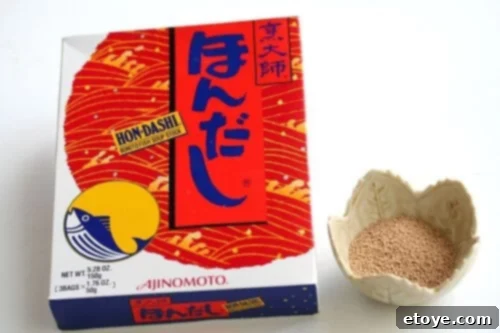
You can certainly make dashi from scratch, which offers the most authentic flavor. However, for convenience, many home cooks (myself included!) opt for **instant dashi powder**. These powders are readily available at Asian grocery stores and provide a quick and easy way to achieve that essential dashi flavor without the time commitment. Simply dissolve the powder in hot water according to package directions.
While dashi is highly recommended for an authentic Miso Soup experience, don’t let its absence deter you. If you don’t have dashi or instant dashi on hand, a good quality **vegetable broth** makes a perfectly acceptable and delicious substitute. It will still provide a flavorful base for your miso and other ingredients.
Customize Your Bowl: Miso Soup with Mushrooms, Tofu, and Beyond!
One of the most appealing aspects of this Miso Soup recipe is its incredible versatility. Consider the core components—miso, dashi, tofu, mushrooms, and leafy greens—as a canvas. From there, you can paint with a myriad of ingredients to suit your taste, what’s in season, or simply what you have on hand. It’s truly a “whatever you have” kind of soup!
For the mushrooms, don’t feel limited to a single type. A mix of Japanese mushrooms like shiitake, enoki, and shimeji will add varied textures and concentrated umami. If those aren’t available, common cremini (button) or oyster mushrooms are excellent choices. As for leafy greens, beyond spinach, bok choy, and napa cabbage, consider adding thinly sliced kale for extra robustness, watercress for a peppery kick, or even thinly shredded cabbage. The firmness of your tofu is also entirely up to your preference; firm tofu holds its shape beautifully, while softer tofu will melt more delicately into the broth.
But why stop there? Here are more ideas to inspire your customization:
- **Noodles:** Add some cooked udon, soba, or ramen noodles for a more substantial meal.
- **Seaweed:** A strip of kombu (used for dashi) can be left in, or add some rehydrated wakame seaweed for extra oceanic flavor and nutrients.
- **Other Vegetables:** Thinly sliced carrots, daikon radish, sweet potato, corn kernels, or even green beans can be added for extra color and texture.
- **Protein Boost:** While tofu provides protein, you could also add thinly sliced cooked chicken, shrimp, or a poached egg right into the serving bowl for a richer experience.
- **Aromatic Enhancements:** A tiny drizzle of sesame oil just before serving, a pinch of shichimi togarashi (Japanese seven-spice blend) for a mild kick, or even a few drops of chili oil can elevate the flavor profile.
Embrace the freedom to experiment and make this Miso Soup truly your own. It’s a forgiving recipe that encourages creativity in the kitchen.
Pro Tips for an Unforgettable Miso Soup
Elevate your homemade Miso Soup from good to exceptional with these practical tips:
- **Never Boil Miso:** This is the golden rule of miso soup. Boiling miso paste destroys its delicate flavor and beneficial enzymes. Always remove the pot from the heat before stirring in the dissolved miso.
- **Temper Your Miso Paste:** Dissolving miso paste in a small amount of hot broth before adding it to the main pot ensures it incorporates smoothly without clumping. This also helps to distribute the flavor evenly.
- **Experiment with Greens:** Don’t be afraid to try different leafy vegetables. Spinach, bok choy, napa cabbage, and even delicate mustard greens work wonderfully, offering varied textures and nutrients.
- **Dashi is Key (but not mandatory):** For the most authentic Japanese flavor, use dashi broth. If dashi isn’t accessible, a high-quality vegetable broth is a perfectly good substitute.
- **Serve Immediately:** Miso soup is best enjoyed fresh off the stove. The flavors are most vibrant, and the ingredients retain their optimal texture when served right away.
- **Ingredient Preparation:** Ensure your tofu is cubed uniformly, mushrooms are sliced consistently, and greens are chopped to a manageable size for even cooking and a pleasant eating experience.
- **Adjust Seasoning to Taste:** Miso pastes vary in saltiness. Always taste your soup after adding the miso and adjust seasoning if necessary. You might find a little soy sauce or a pinch of salt enhances the flavor further.
Explore More Delicious Asian-Inspired Soup Recipes
If you’ve enjoyed the comforting flavors of this Miso Soup, you’re in for a treat with these other fantastic soup recipes that draw inspiration from across Asia:
- Malaysian Chicken Noodle Soup with Asian Greens and Chili-Soy Sauce: A vibrant and aromatic soup bursting with Malaysian street food flavors.
- Vietnamese Pho Recipe: Beef Noodle Soup: Master the art of this iconic Vietnamese beef noodle soup, known for its fragrant broth and tender ingredients.
- 15 Minute Udon Noodle Soup with Miso: A lightning-fast, incredibly satisfying udon noodle soup, perfect for a quick and hearty meal.
- Chinese Bird’s Nest Soup Recipe: Experience a traditional and luxurious Chinese soup, often reserved for special occasions.
We hope you thoroughly enjoy preparing and savoring this Miso Soup with Mushrooms and Tofu. It’s a simple recipe that yields profound flavors and lasting comfort. Have you tried this recipe? We’d be thrilled to hear your thoughts! Please feel free to leave a star rating and share your experiences and any delightful variations you created in the comments below.

Tofu and Mushroom Miso Soup
Jaden Hair
Pin Recipe
Ingredients
- 6 ounces tofu cubed
- 4 ounces fresh mushrooms sliced
- handful of leafy vegetable chopped
- 1 egg whisked
- 2 tablespoons chopped green onion
If using Miso & Easy:
- 4 cups water
- 4 tablespoons Miso & Easy
If using Miso Paste:
- 4 cups dashi or vegetable broth
- 4 tablespoons miso paste
Instructions
- In a sauce pot, bring the broth to a boil. Add in the tofu, mushrooms and the vegetables. While stirring the broth, slowly pour in the whisked egg. Cook for 2 minutes. Remove the pot from the heat.
- If using Miso & Easy: Stir in the Miso & Easy. Top with green onions and serve immediately.
- If using Miso Paste: Ladle about ½ cup of the hot broth into a bowl with the miso paste. Use a fork or whisk to stir and liquify and soften the miso paste. Pour all of the miso paste into the pot and stir gently. Top with green onions and serve immediately.
Nutrition
Carbohydrates: 13g
Protein: 6g
Fat: 3g
Saturated Fat: 1g
Cholesterol: 41mg
Sodium: 2276mg
Potassium: 177mg
Fiber: 2g
Sugar: 5g
Vitamin A: 760IU
Vitamin C: 2mg
Calcium: 37mg
Iron: 1mg