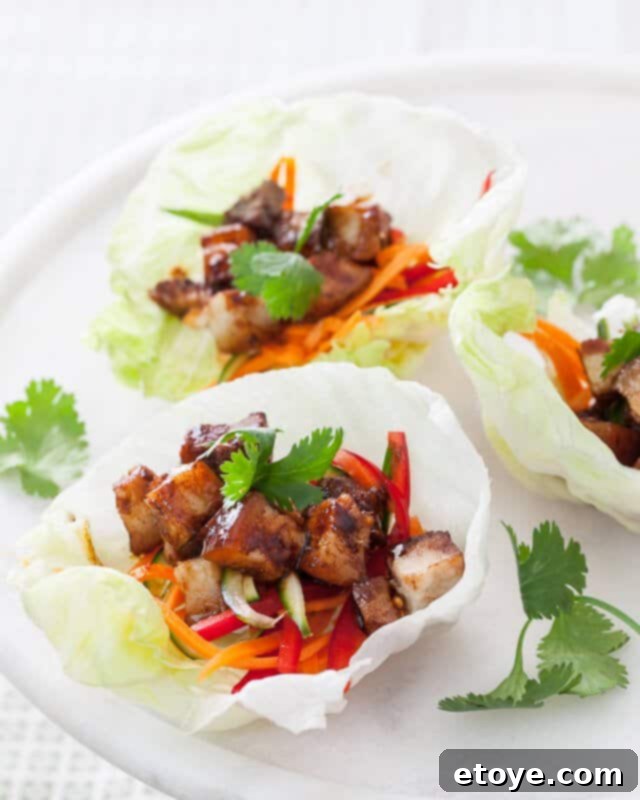
Pork Belly Lettuce Cups: A Masterclass in Tender, Crispy, and Flavorful Bites
While many Asian restaurant menus proudly feature Pork Belly Buns, offering a delightful combination of savory pork and soft steamed bread, we’re introducing a refreshing alternative that you might just enjoy even more: Pork Belly Lettuce Cups. Imagine succulent, melt-in-your-mouth pieces of pork belly, boasting beautifully caramelized edges, nestled atop a vibrant bed of crisp, tangy vegetables. All of this delectable goodness is then wrapped in cool, crunchy iceberg or Boston bibb lettuce leaves, creating an explosion of textures and flavors with every bite. This dish strikes a perfect balance, offering the richness of expertly cooked pork belly complemented by the lightness and freshness of a crisp lettuce wrap.
Our comprehensive guide provides a fool-proof method to achieve pork belly perfection, ensuring even novice cooks can master this incredible dish.
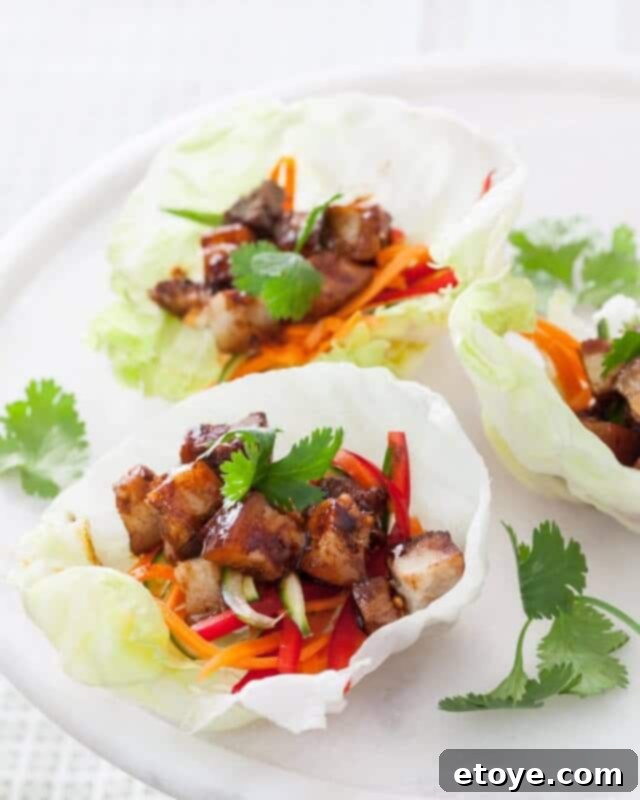
In This Pork Belly Lettuce Cups Recipe, You’ll Master:
- **Cooking Unbelievably Tender, Succulent Pork Belly:** We’ll guide you through methods that guarantee a fork-tender result every time.
- **The Essential Cleaning Step for Pork Belly:** Discover a crucial preparation technique that enhances both the flavor and texture of your pork belly.
- **Achieving Perfectly Crisp, Caramelized Edges:** Learn the secret to finishing your pork belly for that irresistible golden-brown crust.
- **Crafting a Balanced Asian Braising Sauce:** Understand the role of each ingredient in creating a rich, aromatic sauce.
- **Preparing a Refreshing Asian Slaw:** Create a tangy and crunchy complement that perfectly balances the rich pork.
How to Select the Perfect Pork Belly
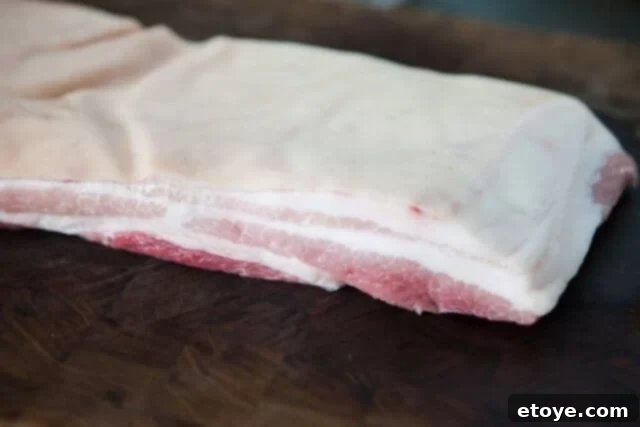
Pork belly, in its cured and sliced form, is widely known as bacon. However, for this recipe, you’ll want to purchase whole, unsliced pork belly, ideally with the skin on. When selecting your pork belly, prioritize pieces that exhibit a good balance of meat and fat. While the image above shows a decent piece, some culinary enthusiasts, including myself, often prefer slightly less fat for this specific dish, aiming for a more balanced bite in the lettuce cups. The key is to find a slab that offers distinct layers of lean meat and creamy white fat, rather than one that is overly fatty or too lean.
The skin should appear firm, smooth, and dry, not sticky or slimy. The fat layers should be pure white, indicating freshness, with no yellowing or discoloration. Always trust your senses: a fresh piece of pork belly should have a very mild, almost neutral scent. If you detect any strong, sharp, or ammonia-like odors, it’s a clear sign that the meat is past its prime, and you should avoid purchasing it.
I frequently source my pork belly from larger Asian markets. These establishments typically have a high turnover of inventory, meaning the meat is consistently fresh. Their wide selection also often provides better cuts suitable for various Asian dishes. While conventional supermarkets do carry pork belly, I always request the butcher to open the package for a quick smell test before I commit to buying, just to ensure absolute freshness.
The Critical Step: Cleaning Your Pork Belly
Before any cooking begins, thoroughly cleaning the pork belly is an absolutely essential step, especially since we’re keeping the skin on for this recipe. The skin, along with the meat, benefits significantly from this preparation. This process isn’t just about hygiene; it also contributes to a cleaner flavor profile and better texture in the final dish. I recommend giving the pork belly, particularly the skin, a vigorous scrub.
You can effectively clean pork belly using just a generous handful of coarse kosher salt – its larger grains provide excellent abrasive power compared to regular table salt. Alternatively, sugar can also be used. Take about two tablespoons of salt and rub it all over the pork belly skin, applying firm pressure, much like you would exfoliate your own skin. This scrubbing action meticulously cleans the meat, helping to dislodge any residual dirt, stray hairs, blood spots, or tiny bone fragments that might be present. After scrubbing, rinse the pork belly thoroughly under cold running water until all salt and loosened impurities are gone, then pat it completely dry with paper towels. This seemingly simple step makes a remarkable difference in the overall quality of your finished dish, ensuring a clean taste and superior texture.
Interestingly, this “exfoliation” technique isn’t limited to pork belly; I’ve found it equally effective for preparing whole chickens, resulting in incredibly clean and beautiful poultry. You can see the dramatic before and after photos in my Hainanese Chicken Rice recipe.
Crafting the Aromatic Pork Belly Braising Sauce

The magic of this pork belly lies not only in its cooking but also in its simple yet profoundly flavorful braising sauce. The sauce is a harmonious blend of dark soy sauce, star anise, ginger slices, Chinese cooking wine, and honey – each playing a vital role in creating depth and richness.
- **Dark Soy Sauce:** Distinct from regular soy sauce, dark soy sauce is characterized by its deeper color, thicker consistency, and slightly sweeter profile due to added sugar. It’s an indispensable ingredient in many traditional Chinese braises, especially for pork belly, where it imparts a beautiful mahogany hue and a complex umami flavor. My preferred brand is Lee Kum Kee, though Koon Chun is also an excellent choice. If dark soy sauce is unavailable, you can create a suitable substitute by combining 1/2 cup regular soy sauce with 1/2 cup brown sugar or molasses and 1/4 cup water. Simmer this mixture for a few minutes until it reduces by half, becoming thick and glossy. For those on a gluten-free diet, simply use tamari instead of regular soy sauce for the substitute.
- **Chinese Rice Wine:** This is a key cooking wine made from fermented rice, contributing a unique depth and aromatic complexity to the braising liquid. Dry sherry makes a good substitute, but surprisingly, I’ve also had success using a splash of cognac when in a pinch, which adds its own subtle character.
- **Ginger:** Thinly sliced ginger, unpeeled, infuses the sauce with a warm, pungent, and slightly spicy aroma that beautifully complements the richness of the pork.
- **Star Anise:** These distinct star-shaped pods are a cornerstone of many Asian dishes, lending a sweet, licorice-like, and highly aromatic flavor. Whole star anise is readily available in most supermarkets. If you can’t find whole pods, you can substitute with 1/2 teaspoon of ground star anise or 1/2 teaspoon of Chinese five-spice powder, which typically contains star anise among other spices.
- **Sweetener (Honey):** Honey provides a lovely sweetness that balances the savory notes and contributes to the beautiful caramelization. Other excellent alternatives include dark brown sugar or maltose. Maltose, a less sweet sugar traditionally used in Chinese cuisine for dishes like Peking duck and even in brewing, offers a unique depth of flavor and glossy finish. It might be harder to find outside of Asian markets, but any of these sweeteners will enhance the sauce significantly.
Choose Your Preferred Cooking Method for Pork Belly
Achieving exquisitely tender pork belly is possible through a couple of reliable methods. Select the one that best suits your kitchen setup and preference:
Sous Vide Pork Belly: Precision and Tenderness
My absolute favorite method for cooking pork belly is using a sous vide machine. This technique involves cooking the pork belly in a precisely temperature-controlled water bath, which results in unparalleled tenderness and consistent doneness throughout. The sous vide method virtually guarantees a succulent, perfectly cooked interior, ready for its final crisping stage.
**To sous vide:** Simply combine all the braising sauce ingredients with the pork belly in a freezer-safe or vacuum-sealable bag. Remove as much air as possible (using a vacuum sealer is ideal). Set your sous vide water bath to 176°F (80°C) and cook for a generous 6 to 8 hours. This extended, low-temperature cooking breaks down the connective tissues in the pork belly, rendering it incredibly tender without drying it out.
Regarding equipment, the best sous vide machine often depends on your budget and how frequently you plan to use it. On my countertop, you’ll find an Oliso Sous Vide – an appliance I absolutely adore, though it represents a significant investment. Given that we use our sous vide machine at least 2-3 times a week, it has become an indispensable appliance in my kitchen for its versatility and consistent results.
Easy Oven Braised Pork Belly: Traditional Depth of Flavor
The next excellent method for cooking pork belly is through traditional oven braising. This technique allows for deep flavor development as the pork slowly simmers in the aromatic sauce. For optimal results, select a pot with a lid that is not excessively large. The pork belly should fit snugly within the pot; you might need to cut it into a few pieces to ensure a tight fit. Using a pot that is too wide will cause the braising liquid to spread out and evaporate too quickly, preventing the pork belly from being adequately submerged and remaining moist. Once the pork belly and sauce are in the pot, create a snug “tent” over the meat and liquid using aluminum foil. Use your hands to mold the foil closely around the pork belly, trapping steam and moisture near the meat. This is crucial for maintaining moisture and tenderness throughout the long cooking process.
Add all the ingredients to your chosen pot, cover it tightly with the lid (and your foil tent), and roast in a preheated oven at 200°F (93°C) for 4-6 hours. This low and slow cooking method yields incredibly tender pork belly infused with rich flavors.
The Final Touch: Reducing the Braising Sauce
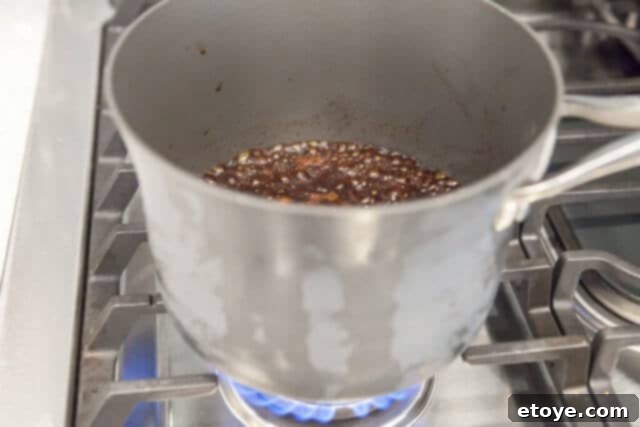
Regardless of whether you opted for the sous vide or oven braising method, the next step is to transform your flavorful cooking liquid into a rich, glossy glaze. Carefully pour the braising sauce (discarding the ginger slices and star anise) into a saucepan. Bring it to a gentle simmer over medium heat and let it reduce. Stir occasionally, allowing the liquid to thicken and concentrate, until it achieves a syrupy consistency, roughly half its original volume. This concentrated sauce will provide an incredible depth of flavor and a beautiful sheen to your finished pork belly.
Dice and Perfectly Fry Your Pork Belly
Once your pork belly is tender from braising, it’s time to prepare it for its crispy transformation. Carefully lift the pork belly from the reduced sauce and let it cool slightly. Then, dice the pork belly into bite-sized pieces. The goal here is to create uniform cubes that will crisp up evenly in the pan, providing maximum surface area for that desirable caramelized crunch.
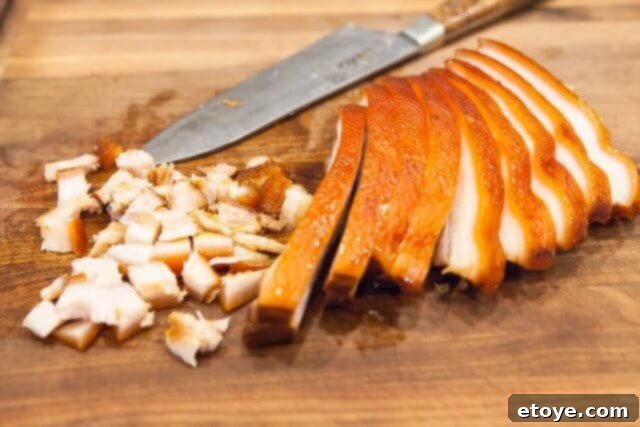
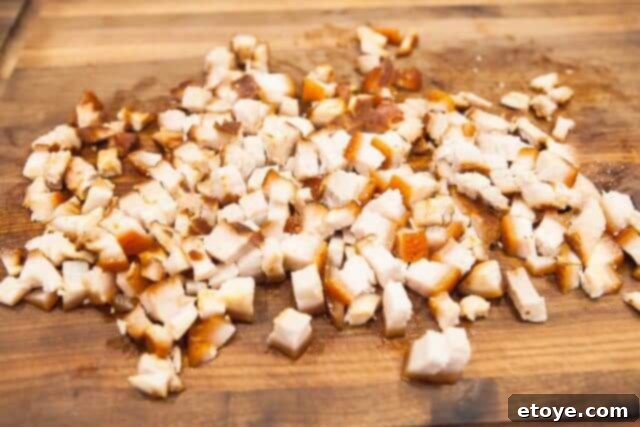
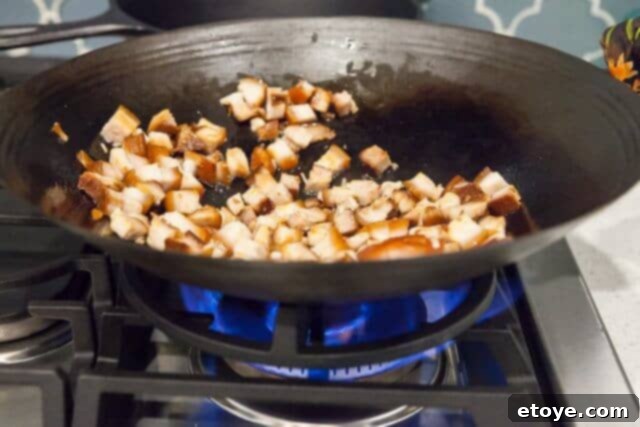
Heat a wok or a large sauté pan over medium-high heat. Drizzle in a small amount of cooking oil – just enough to coat the bottom of the pan. Add the diced pork belly, spreading the pieces into a single layer so that each one makes direct contact with the hot pan. Resist the urge to stir immediately; allow the pork belly to cook undisturbed for about a minute. This initial contact is crucial for developing a crispy crust. After a minute, give the pork belly a good stir or flip, rearranging the pieces. Continue this process, stirring and flipping every minute or so, until all sides of the pork belly are beautifully browned and the edges are wonderfully crisp. The rendering fat will contribute to its own crispiness.
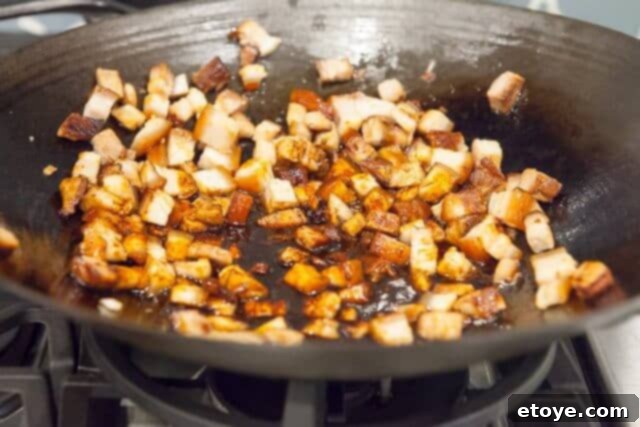
Once the pork belly has reached your desired level of crispness, pour in the reduced, syrupy braising sauce. Give everything a quick, thorough stir, ensuring each piece of pork belly is glisteningly coated in the rich, glossy sauce. Cook for just a few more seconds, allowing the sauce to further thicken and cling to the pork, creating an irresistible glaze. Be careful not to overcook once the sauce is added, as you want to maintain the crispy texture of the pork belly.
Preparing the Quick and Tangy Asian Slaw
To perfectly complement the rich, savory pork belly, a fresh and vibrant Asian slaw is essential. I particularly love using crisp bell peppers and sweet carrots in this recipe for their color and crunch. Begin by julienning the bell peppers and cutting the carrots into delicate matchstick pieces. For convenience, you can opt for pre-shredded carrots from the store, julienne them by hand with a sharp knife, or utilize a specialized tool for perfectly uniform cuts.
For effortless julienning, I highly recommend the Oxo brand julienne tool, which is typically under $10. It consistently produces straight, precise julienne slices, as you can observe on the left side of the image below. Another excellent option is the Kuhn Rikon Julienne Peeler. This lighter tool creates slightly thinner julienne cuts that tend to curl delicately, as shown on the right.

The julienned vegetables are then lightly tossed with a bit of seasoned rice vinegar. It’s important to note that there are two main types of rice vinegar: regular (unsweetened) and seasoned (sweetened). If you can only find regular rice vinegar, which contains no sugar, simply add a generous pinch of salt and about 1 teaspoon of sugar to achieve the desired sweet-tangy balance. Alternatively, apple cider vinegar with added sugar can also work as a substitute. The sugar in the dressing is crucial, as it beautifully tames the sharp sourness of the vinegar, creating a refreshing and palatable flavor profile that cuts through the richness of the pork.
For serving, arrange your cool, crisp iceberg or Boston bibb lettuce cups and have some fresh cilantro ready. The vibrant green of the lettuce, the tang of the slaw, and the aromatic burst of cilantro create a symphony of flavors and textures that elevate the rich pork belly into an unforgettable culinary experience.
Pork Belly Lettuce Cups Recipe
Cooking time varies depending on chosen method.
Prep Time
15 mins
Servings
6
Ingredients
FOR THE PORK BELLY
- 1 pound pork belly
- 1/2 cup dark soy sauce
- 2 tablespoons Chinese rice wine (or dry sherry)
- 1/2 cup water
- 5 whole star anise
- 8 pieces thinly sliced ginger
- 2 tablespoons honey
- 1 tablespoon cooking oil
VEGETABLES
- 1 head iceberg or Boston bibb lettuce, torn into cups
- 1 bell pepper, julienned
- 1 carrot, julienned
- 1 cucumber, julienned
- 2 tablespoons seasoned (sweetened) rice vinegar
- Fresh cilantro for garnish
Instructions
- Heat oven to 200°F (93°C) if using the oven braising method.
- Scrub the skin of the pork belly thoroughly with a handful of kosher salt or sugar. Rinse well under cold water and pat completely dry with paper towels.
- **For Oven Braising:** In a pot, stir together the dark soy sauce, Chinese rice wine, water, star anise, ginger, and honey. Add the cleaned pork belly. Create a snug tent over the pork belly and liquid with aluminum foil, pressing it down to mold over the meat. Cover the pot with its lid.
- **For Sous Vide:** Omit the water. Combine dark soy sauce, Chinese rice wine, star anise, ginger, and honey with the pork belly in a vacuum-sealable bag. Seal the bag, removing as much air as possible. Sous vide at 176°F (80°C) for 6-8 hours.
- **Continue with Oven Braising:** Roast the covered pot at 200°F (93°C) for 4-6 hours until the pork belly is fork-tender.
- When cooking is complete (for either method), carefully lift out the pork belly and dice it into bite-sized pieces. From the remaining braising liquid in the pot or bag, discard the ginger and star anise. Pour the sauce into a small saucepan and simmer for a few minutes over medium heat until it reduces and thickens to a syrupy glaze.
- To prepare the slaw, combine the julienned bell peppers, carrots, and cucumber in a bowl. Drizzle with the seasoned (sweetened) rice vinegar and toss gently to coat. Taste and adjust with more vinegar or a pinch of sugar if needed; the slaw should be delightfully sweet and tangy.
- Heat a wok or large sauté pan over high heat. Once hot, swirl in the cooking oil. Add the diced pork belly in a single layer and let it cook undisturbed for 1 minute to allow a crust to form. Stir and flip the pork belly, repeating the process until all sides are beautifully browned and crisp.
- Pour the reduced braising sauce over the crispy pork belly in the pan. Stir well to ensure all pieces are thoroughly coated. Cook for just about 1 minute more, allowing the sauce to further glaze the pork.
- Serve the glazed, crispy pork belly immediately in cool iceberg or Boston bibb lettuce cups, topped with a generous portion of the tangy Asian slaw and a fresh sprig of cilantro. Enjoy this explosion of flavors and textures!